
Hey kids, today we’ll be learning about the boiling water reactor (BWR)

What is a Boiling Water Reactor?
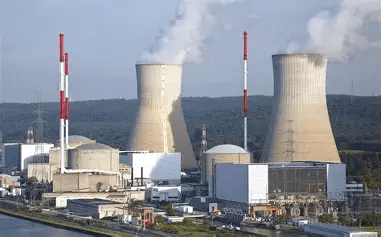
A Boiling Water Reactor is a type of nuclear reactor used for the generation of electrical power and is the 2nd most common type of nuclear reactor, after the pressurized water reactor (PWR). Unlike other designs such as the Soviet Реактор большой мощности канальный (Pronounced Reaktor Bolshoy Moshchnosti Kanalnyy, RBMK for short) — where graphite was used as the moderator and light water was used for a slight role in moderation, but mainly for coolant — BWR used light water as both its moderator and coolant. Unlike the PWR where the water used for steam does not come in contact directly with the reactor primary vessel (RPV), in BWR reactors, water comes in direct contact with the RPV, boiling off into steam in that vessel.
How does it work?
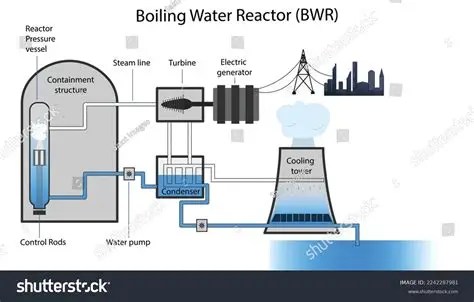
This very low-quality diagram of the BWR shows us how these types of reactors basically work. In the RPV, fuel rods composed of Uranium inside lead protected casings undergo a process called fission (splitting of an atom) which creates heat. This heat then boils the water surrounding the core, turning it into steam. This steam will travel through the steam line, powering the turbines, generating electricity. Modern BWRs can produce up to 1300MWe, enough to power the city of San Diego.

^ Konata supremacy
History of BWRs
The concept of BWRs came after the PWR concept. The development of BWRs began in the early 1950s by General Electric (GE). The research of nuclear power was led by interestingly, military services, especially for the United States’ Navy, who were looking for a reactor for their nuclear submarines at the time.

GE went through 6 design phases, then came up with the 1st generation of the BWR. These BWRs were capable of generating ~500 MWe and came with a Mark I containment vessel.
A containment vessel is a container surrounding the reactor vessel. These were usually made of concrete or steel for the primary containment, Drywell and Wetwell in various combinations.
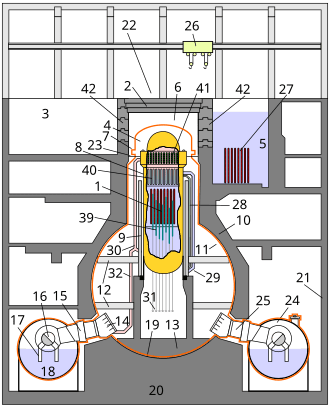
This diagram shows the typical BWR equipped with the Mark I containment vessel. In total, there were 3 generations of BWRs:
- 1st generation BWR: BWR/1 with Mark I containment.
- 2nd generation BWRs: BWR/2, BWR/3 and some BWR/4 with Mark I containment. Other BWR/4, and BWR/5 with Mark-II containment.
- 3rd generation BWRs: BWR/6 with Mark-III containment.
There are other types of BWRs as well, such as the Advanced boiling water reactor (ABWR), designed by GE Hitachi. The ABWR was a high-power BWR reactor designed in the early 1990s, with several improvements since the original BWR design by GE.

This diagram shows the UK ABWR design with a containment vessel. As you can see, the design defers from the original shape that looked like a keyhole, to a basic square. However, the overall safety and controls have been improved significantly.
That’s it for today. Bye kids, make sure to check your Halloween candy…

 DasBlog
Leave a comment