
hi kids. let’s look at the untold story of Kyshtym today (i spelt it wrong so many times)

Introduction
The Kyshtym disaster (Кыштымская авария) was a radioactive contamination accident that occurred on 29 September 1957 at Mayak, a plutonium reprocessing production plant for nuclear weapons located in the closed city of Chelyabinsk-40 (now Ozyorsk) in Chelyabinsk Oblast, Russia in the Soviet Union.
The disaster is the second worst nuclear incident by radioactivity released, after the Chernobyl disaster and was regarded as the worst nuclear disaster in history until Chernobyl. It is the only disaster classified as Level 6 on the International Nuclear Event Scale (INES). It is the third worst nuclear disaster by population impact after the two Level 7 events: the Chernobyl disaster, which resulted in the evacuation of 335,000 people, and the Fukushima Daiichi disaster, which resulted in the evacuation of 154,000 people. At least 22 villages were exposed to radiation from the Kyshtym disaster, with a total population of around 10,000 people evacuated. Some were evacuated after a week, but it took almost two years for evacuations to occur at other sites.
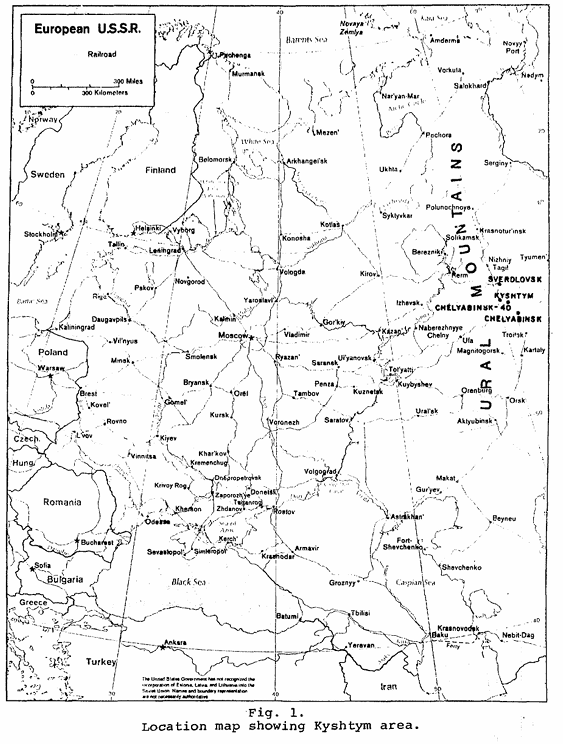
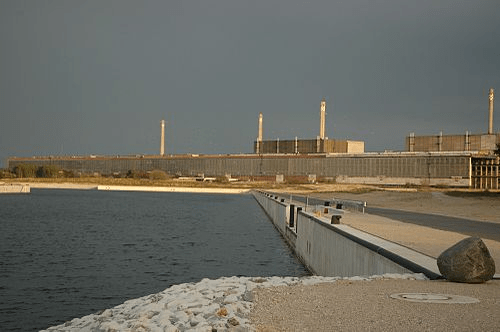
Before the 1957 accident, much of the waste was dumped into the Techa River, which severely contaminated it and residents of dozens of riverside villages such as Muslyumovo, who relied on the river as their sole source of drinking, washing, and bathing water. After the 1957 accident, dumping in the Techa River officially ceased, but the waste material was left in convenient shallow lakes near the plant instead, of which 7 have been officially identified.
The Explosion
In 1957, the Mayak plant’s underground tank of high-level liquid nuclear waste exploded. This happened due to a failure of a cooling system in the radioactive waste storage tank. In said tank that contained an estimated 70-80 tons of high-level waste, the cooling system broke down. The system remained inoperative for about a year, but due to poor oversight and secrecy, the problem either went unnoticed or was ignored. As a result, the temperature inside the waste gradually rose.
Without cooling, the liquid waste partly evaporated, leaving behind a thick layer of solid nitrate and acetate salts. When the temperature exceeded ~300 degrees Celsius, these salts underwent an exothermic chemical reaction. This happened on 29 September 1957, at 4:22 pm. The explosion was equivalent to around 70-100 tons of TNT.
The explosion lifted a concrete slab weighing 160 tons, and a brick wall was destroyed in a building located 200 meters (660 ft) from the explosion site. After the explosion, a column of smoke and dust rose to a kilometre high; the dust flickered with an orange-red light and settled on buildings and people. The rest of the waste discarded from the tank remained at the industrial site.
The blast destroyed the tank’s concrete lid and released around 20 MCi (megacuries) of radioactivity, mostly consisting of strontium-90 and cesium-137 into the environment. Roughly 10-20% (~2 MCi) of this was carried into the atmosphere and formed a radioactive cloud. The fallout created the so-called East Ural Radioactive Trace (EURT), contaminating ~20,000 km squared. At least 200 towns and villages were exposed, with around 10,000 people evacuated. Thanks to the Cold War, this accident remained in secrecy until 1989.
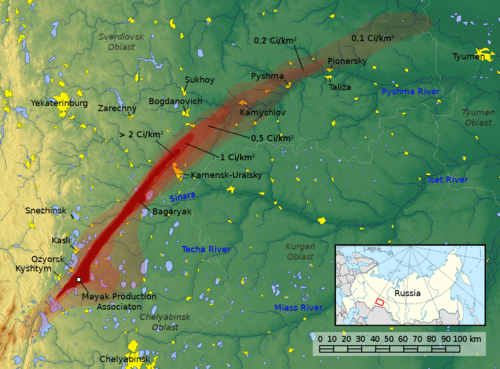
^ Map of the EURT
Zhores Medvedev
However, according to the ‘An Analysis of the Alleged Kyshtym Disaster’ published in January 1982, revealed that this accident was actually recognized in late 1976 by Zhores Medvedev, an exiled Soviet geneticist living in England. He wrote articles and books on the occurrence of a nuclear disaster in the Ural Mountains of the Soviet Union circa 1957-58. He concluded that a vast area of radioactive contamination extending “probably more than a thousand square miles” exists in Chelyabinsk Province, east of the city of Kyshtym.
In his letter to the Jerusalem Post and to The London Times he stated that:
“About 100 kilometers from Sverdlovsk, a highway sign warned drivers not to stop for the next 20 or 30 kilometers and to drive through at maximum speed. On both sides of the read, as far as one could see, the land was ‘dead1: no villages, no towns, only the chimneys of destroyed houses, no cultivated fields or pastures, no herds, no people…nothing.”
 DasBlog
Leave a comment